



- Blog
- 28 Nov 2025
Fracture Toughness of Composite Materials
Composite materials are widely used in industries such as aerospace, automotive, civil engineering, and healthcare because of their high strength and low weight. One important property that determines their performance and safety is the fracture toughness of composites. This property tells us how well a material can resist the growth of cracks when under stress. Understanding fracture toughness is essential for engineers and researchers who design structures that must remain strong and reliable, even in demanding environments.
What Is Fracture Toughness?
Fracture toughness is a property that describes how well a material can resist the growth of cracks when it is under stress. In other words, it measures a material’s ability to keep working safely even if small cracks appear during use. This is different from strength, which only tells us how much force a material can handle before breaking. Fracture toughness focuses on what happens after a crack starts, which is often the most dangerous stage in real applications.
In composite materials, fracture toughness becomes more complex because these materials are not uniform like metals or ceramics. Composites are made of two main parts:
- Fibers – provide high strength and stiffness.
- Matrix – binds the fibers together, transfers load, and protects them from damage.
When a crack begins in a composite, it does not always travel in a straight line. Instead, it may change direction, split, or stop temporarily depending on the fiber orientation, bonding quality, and type of matrix. For example, a crack might move along the fiber-matrix interface or cut across the fibers themselves. Each of these paths requires different amounts of energy, which is why the fracture toughness of composites can vary widely.
This property is especially important in industries where safety and long-term performance are critical. For instance, in aerospace and automotive engineering, engineers need to ensure that composite parts can withstand repeated loads without sudden failure. Similarly, in civil engineering applications like bridges or building materials, good fracture toughness helps prevent small cracks from spreading into serious structural damage.
Importance of Fracture Toughness in Composites
The fracture toughness of composites is one of the most important properties to consider when designing advanced materials. A composite may have excellent strength and stiffness, but if it has low fracture toughness, even a small crack can grow quickly and cause sudden failure. This makes fracture toughness a critical factor for safety, reliability, and cost efficiency.
1. Safety in High-Stress Applications
In industries like aerospace and automotive, composite parts are often exposed to extreme loads, vibrations, and temperature changes. If the material cannot resist crack growth, it may fail without warning. High fracture toughness ensures that cracks grow slowly, giving engineers time to detect and repair them before they become dangerous.
2. Longer Service Life
Structures with higher fracture toughness last longer because small defects or damage do not immediately turn into serious cracks. This is especially important for civil engineering materials such as glass fiber reinforced concrete, where durability directly affects maintenance costs and overall project value.
3. Cost Reduction
Materials with higher fracture toughness reduce repair and replacement costs. Since cracks develop more slowly, inspection intervals can be longer, and fewer parts need to be replaced during a product’s life cycle. For businesses, this translates into lower operational expenses and higher productivity.
4. Support for Advanced Manufacturing
Modern manufacturing techniques, such as automated fiber placement, rely on precise control of fiber alignment and bonding. Fracture toughness data helps engineers optimize these processes, ensuring the final product maintains strength even under demanding conditions.
In short, improving fracture toughness makes composites not only stronger but also safer, longer-lasting, and more economical. This is why researchers and manufacturers pay close attention to this property when developing new composite materials.
Experimental Techniques: Mode I, Mode II, and Mixed-Mode Loading
To measure the fracture toughness of composites, researchers use different experimental techniques that simulate how cracks behave under various loading conditions. Since composites are complex materials, cracks can form and grow in several ways. The three most common testing modes are Mode I (opening), Mode II (sliding), and mixed-mode loading.
Mode I – Opening (Tensile) Loading
In Mode I, the crack surfaces are pulled apart directly, like tearing a piece of paper. This type of loading is very common and often used as the baseline for comparing materials. Mode I testing helps evaluate how easily a composite can resist crack growth when the forces are perpendicular to the crack plane.
Mode II – Sliding (Shear) Loading
In Mode II, the crack surfaces slide over one another in opposite directions. Imagine pushing the top of a book to the left while holding the bottom steady — this creates shear. Mode II is particularly important for laminated composites where layers may slide and separate under load. Testing in this mode shows how well the fiber–matrix interface resists shear stresses.
Mixed-Mode Loading
In real-life applications, cracks rarely grow under a single type of loading. Instead, they often experience a combination of tensile and shear forces at the same time. This condition is called mixed-mode loading. For example, in aerospace structures made by filament winding, cracks may open and slide simultaneously due to complex stress patterns. Mixed-mode testing gives engineers more realistic data on how a material behaves under service conditions.
By studying all three modes, researchers can build a complete picture of fracture behavior. This knowledge allows engineers to design safer, more durable structures and choose the right composite materials for different industries.
Effect of Fiber Type and Volume Fraction
The type of fiber used and the amount of fiber within a composite play a major role in determining its fracture toughness. Since composites are combinations of fibers and a matrix, the performance depends on how these two components interact when a crack begins to form.
Fiber Type
Different fibers provide different levels of strength, stiffness, and toughness.
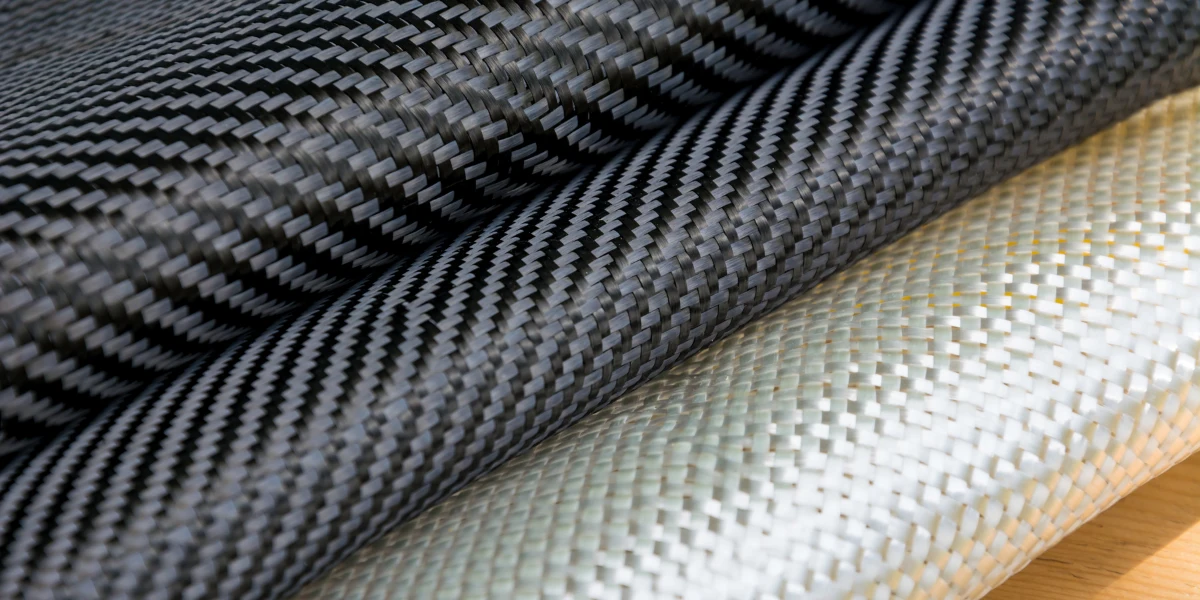
- Glass fibers are widely used because they are affordable, lightweight, and have good toughness.
- Carbon fibers offer higher stiffness and strength but can sometimes make the material more brittle if not combined with a suitable matrix.
- Aramid fibers (such as Kevlar) provide excellent impact resistance and are often used in protective equipment and aerospace applications.
Each fiber type influences how cracks move. For example, carbon fibers may deflect cracks, while aramid fibers may absorb energy through stretching. Selecting the right fiber type is therefore crucial for applications where safety and durability are priorities.
Fiber Volume Fraction
The fiber volume fraction is the ratio of fibers to matrix in a composite. A higher fiber content usually increases strength and stiffness, but if it becomes too high, the matrix may not have enough presence to hold the fibers together effectively. This can reduce fracture toughness, as cracks may travel more easily through weak fiber–matrix bonds.
On the other hand, too low a fiber volume fraction may reduce overall performance, as the matrix alone cannot provide enough reinforcement. For optimal fracture toughness, engineers aim for a balance where fibers and matrix work together to resist crack growth.
Practical Impact
By adjusting fiber type and volume fraction, manufacturers can design composites tailored to specific needs — for example, lightweight aerospace panels, long-lasting automotive parts, or durable construction materials. Understanding these effects helps businesses achieve the best combination of safety, performance, and cost efficiency.